










Arlene & Raphael transition story, letting go
DHF Community Blog, T1D Blog, Type 1 Diabetes Blog

Type 1 Diabetes Tech: Finding the Right Fit for You

Mar 31, 2026 | Type 1 Diabetes, Type 1 Diabetes Technology

Type 1 Diabetes Tech: Finding the Right Fit for You

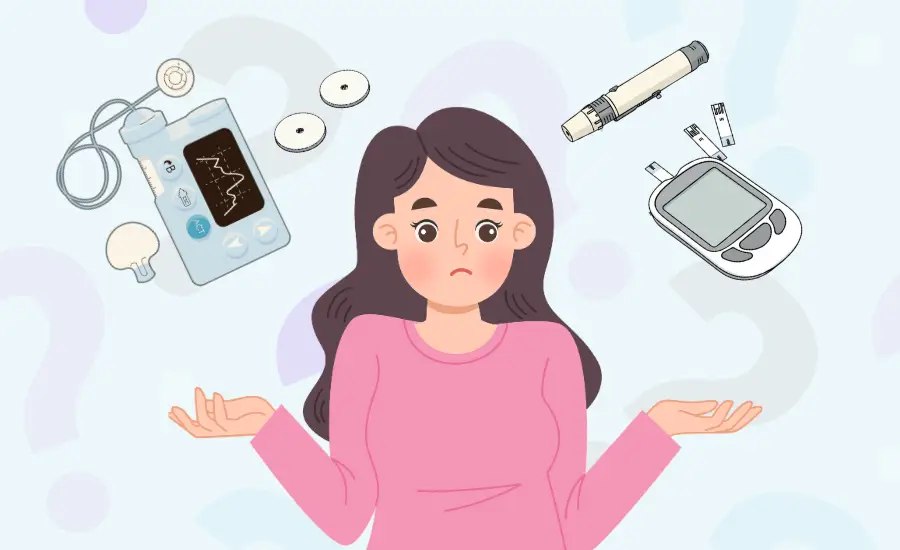
Pumps, continuous glucose monitors, pens, apps, devices…where do you start? Choosing diabetes tech that works for you can be a long journey, but one that is important to embark upon. As technology is continuously emerging within the field of diabetes care, it’s essential to stay updated on new devices designed to help you with management.

While all of these options are incredibly valuable, they can also feel overwhelming. One of the most important things to learn early on is that there is no “perfect” system. The best diabetes care plan is the one that fits your life.

Building Confidence with Injection Pens

For most people, that journey begins with injection pens. After being diagnosed at age twelve, I started using pens because that was the option provided to me at the time. Despite my crushing fear of needles, I was able to successfully and independently use injection pens within weeks of my diagnosis. Over time, I found they were simple, reliable, and easy to adjust. They helped me build confidence and understand how my body responded to insulin, food, stress, and activity.

type 1 diabetes tech

Exploring Insulin Pumps

As your experience grows, many people become curious about insulin pumps. My diabetes care team told me how pumps can offer flexibility and customizable dosing without injections (excluding site insertion), and give you more freedom to dose discreetly whenever you need to. At fifteen, I switched to a pump, hoping it would make daily management easier. I heard so many wonderful stories about pumps, and looked forward to experiencing this myself. For some people, they are life-changing.

However, pumps are not automatically better for everyone!

My Experience Navigating Insulin Pump Use

During my time using a pump, I found it difficult to maintain consistent control. Learning the settings and lingo, managing technical issues, and trusting the system took a lot more energy than expected. Managing a basal rate was more confusing than I thought it would be, and I felt like I was trying to balance more than before. Instead of feeling carefree, I felt more stressed.

I found that replacing my insertion site took more mental energy and time than it did to quickly pull out an injection pen and give myself insulin. In addition to this, I never felt like I could find my groove. I stayed on it for the majority of the school year, but ultimately decided to return to pens.

This experience highlighted an important truth: just because there’s a newer product on the market, it doesn’t mean it always works better. My time-in-range and A1Cs have always been more consistent with injection pens, and I feel confident in my diabetes management using this system. Today, at twenty-two, I still use them! Managing diabetes feels natural, and pens suit my lifestyle. Let your care plan evolve with you instead of trying to fit a mold that may not work for you.

Pick what fits your habits, routines, and comfort level!

type 1 diabetes tech

Pens vs. Pumps: Which Is Right for You?

When choosing between injection pens and insulin pumps, it helps to think about your daily routines.

Injection pens may be a good fit if you:

☑️ Prefer simplicity and fewer devices
☑️ Like having direct control over dosing
☑️ Are comfortable with multiple daily injections
☑️ Go to school/work farther away from home (depending on the pump brand, bringing backup needles and cartridges can weigh a lot less in a bag than backup pumps / pump supplies)

Insulin pumps may be a good fit if you:

✅ Want customizable basal rates
✅ Prefer fewer injections
✅ Like having insulin delivery automated

Neither option is better. Both are effective when it is your desired method of treatment.

Choosing a Continuous Glucose Monitor (CGM)

CGMs have also become an essential tool for many people with diabetes. Many brands offer different features, interfaces, and levels of integration with pumps. For example, some CGMs connect to certain pumps and can make dosing decisions for you (e.g. reducing your basal rate when your blood glucose is dropping).

When choosing a CGM, consider:

👉🏻 Accuracy and reliability
👉🏻 Sensor wear time
👉🏻 Comfort
👉🏻 Smartphone compatibility
👉🏻 Insurance coverage

Some people prefer real-time alerts and detailed data, while others want a simpler system with minimal notifications. Again, the right choice depends on personal preference.

Through my own journey with type one diabetes, I tested a variety of CGM options before I settled on one that I liked best. I was using a manual glucose tester for the first 5 or 6 years of my diagnosis because I couldn’t find one that was accurate enough. Similar to when I tested out a pump, I gave a CGM around 3 months of use before I decided that it wasn’t benefiting me. Lots of factors can affect how accurate a CGM is on you; including your skin type, where you insert it, and how long you have worn it for. For me, using a manual glucose tester was better for a while since I had inaccurate readings with the CGM I had tested. However, I soon found another model of CGM that worked amazingly well for me, and haven’t gone back since (except for when I need to calibrate)!

Letting Your Lifestyle Guide Your Care

Diabetes management is not an isolated part of your life. It intersects with school, work, social life, mental health, and physical activity. A system that works well in one phase of life may not work in another.

Questions to ask yourself include:

1️⃣ How comfortable am I with technology?
2️⃣ How much time can I dedicate to managing devices?
3️⃣ Do I prefer structure or flexibility?
4️⃣ How do stress and routine affect my blood sugar?
5️⃣ When do I have the time to learn a new system?

Honest answers to these questions can help guide your technology decisions.

Changing Your Mind is a Part of the Process

One of the most important lessons in diabetes care is that switching systems is not a sign of failure. Trying different tools, returning to previous methods, or adjusting routines is part of learning what works.
Healthcare providers can offer guidance, but the person living with diabetes is always the true expert on their own body. Trust yourself!

The Bottom Line

Living with type 1 diabetes means making ongoing choices. From pens and pumps to CGMs, each option offers benefits and challenges. The goal is not to find the most advanced system, but the most sustainable one.

The right care plan is the one that:

💜 Supports your mental and physical health
💜 Fits into your daily life
💜 Supports your Time-In-Range
💜 Encourages long-term consistency

Listening to your body, staying open to change, and choosing tools that match your lifestyle can make diabetes management feel much more natural. Choose what works for you!

About the Author

Heather Janine bio

Hi everyone! My name’s Heather and I was diagnosed with type one diabetes in 2015. I’m a Program Facilitator for DHF and my work mainly focuses on the online supports we provide students across Canada. Currently, I’m a teacher candidate in Trent University’s Bachelor of Education program, and I also work for the university as part of their student staff. In my spare time, I teach music lessons to local youth and am passionate about participating in educational initiatives that support inclusive learning and students with disabilities.

Follow Us:

Diabetes Hope Foundation (DHF) is a Canadian not-for-profit organization founded in 1999. The foundation’s mission is to provide education and resources to help youth with diabetes transition to a healthier tomorrow. Learn more about our youth programs and resources below.

Stay Connected!

Join our mailing list to receive occasional newsletters with the latest news and updates about our programs, resources & upcoming events!

Blog Categories

Recent Posts

Get Ready to Transition!

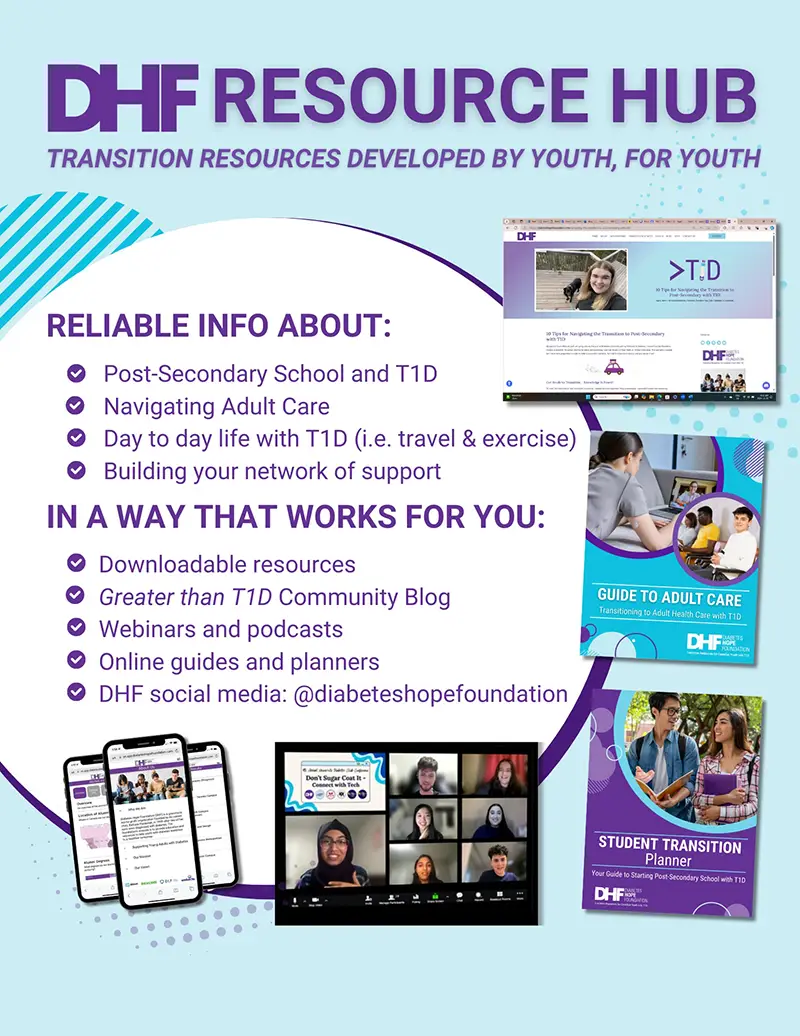
Transition Resource Hub, Resource Hub, Diabetes Resources, Type 1 Diabetes Resources, T1D Resources

Join our DHF Community!

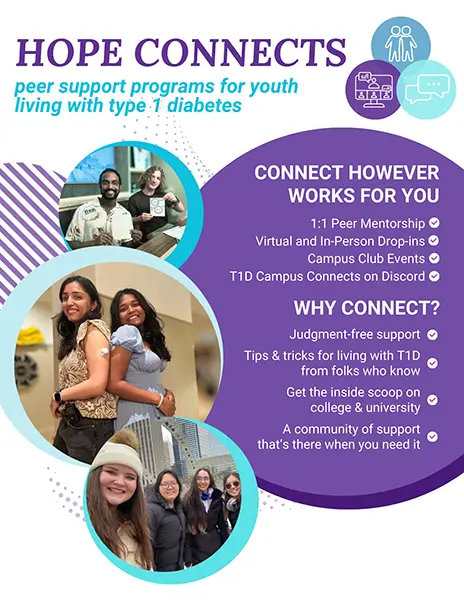
Hope Connect Program Flyer 2026
Donate