Arlene & Raphael transition story, letting go
DHF Community Blog, T1D Blog, Type 1 Diabetes Blog

Helping Others Learn About Type 1 Diabetes in an Education Setting

Aug 14, 2026 | Diabetes Advocacy, Type 1 Diabetes

Helping Others Learn About Type 1 Diabetes in an Education Setting

For many youth living with type one diabetes, one of the biggest challenges can be learning how to readjust to the classroom. No matter what grade you’re in when you’re diagnosed, it can be quite difficult to manage this sudden change. Suddenly, tests you could usually complete within an hour require more time due to low or high glucose interruptions, and you have to give insulin every time you eat lunch or have a snack. When all of these new experiences happen at once, it can become very overwhelming.

I found something that helped me when I was diagnosed in Grade 7 was to tell my teacher a little bit more about type one diabetes and how it affected me. This was one of the first forms of self-advocacy that I engaged in, and set me up for years of explaining what having type one diabetes meant to high school teachers, teacher assistants, professors, and more during my education.

Learn about type 1 diabetes, diabetes advocacy in school

Type 1 Diabetes Advocacy

Before continuing, I’d like to establish a T1D-specific definition of advocacy.

Advocacy is a skill you build over time. It means knowing what you need, asking questions when things feel unclear, and feeling confident communicating your needs with the people around you. These skills will follow you everywhere: at school, work, during activities, while travelling, with friends, and eventually as an adult managing your own healthcare.

Why Advocacy Matters

Advocacy makes your day-to-day life safer and less stressful in school. When you speak up, teachers understand what to watch for, coaches know how to support you, friends can recognize symptoms of a low and high quicker, and your clinic team can get a clearer picture of what’s working (and what isn’t). It’s not about being demanding or oversharing – it’s about giving others the opportunity to understand how to help you succeed

Various Clinic Supports

Your clinic can be a big part of your advocacy journey. It’s also important to remember that each clinic offers different services. For example, when I was first diagnosed at 12-years-old, my clinic offered to come in and speak to my teacher and the school staff to give them a better understanding of type one diabetes; but not all clinics offer this service.

You could ask your clinic to help you practice what to say, write letters, establish medical plans for school, help problem-solve tough situations, or guide you toward other supports like school nurses, youth programs, or online communities.

Some clinics (not all) can visit classrooms or speak directly with teachers. When this is possible, it can make a big difference. But if your clinic can’t do that, it doesn’t mean they aren’t supporting you. It just means support might look different – ask about how they can help you navigate this difficult time.

Learning How to Ask for What You Need

Advocacy starts with simple questions. You don’t need perfect conversational skills – just the willingness to research what will work best for you. At your next appointment, you might ask:

  • “Can you help me explain diabetes to my teachers?”
  • “What do other students my age usually tell their school?”
  • “Do you have a resource I can give to my teacher or coach?”
  • “ Are there any videos you recommend me sending to my teacher/coach/principal?”
  • “Can we practice how I should talk to an adult about my diagnosis?”

Sometimes it helps to see examples of others communicating confidently. These videos helps to explain more about what self advocacy and returning to school might look like:

Self Advocacy Skills – Self Advocacy Strategies

Preparing for School with Type 1 Diabetes: What You Need to Know

Building Support Beyond the Clinic

A strong advocate builds a team – not just one source of support. You can connect with school guidance staff, local youth centres, youth mental-health programs, and small independent online communities made for youth with T1D.

Here are non-diabetes-organization websites where youth talk honestly about chronic illness, school, and self-advocacy:

Practicing Advocacy at School

School is the perfect place to practice engaging in advocacy. Things like telling a teacher when you need extra time, reminding a substitute about your accommodations, or explaining why you need a snack can feel scary at first – but every time you speak up, you gain confidence.

Sometimes sharing diabetes-specific resources can be beneficial if you want teachers to understand invisible conditions better.

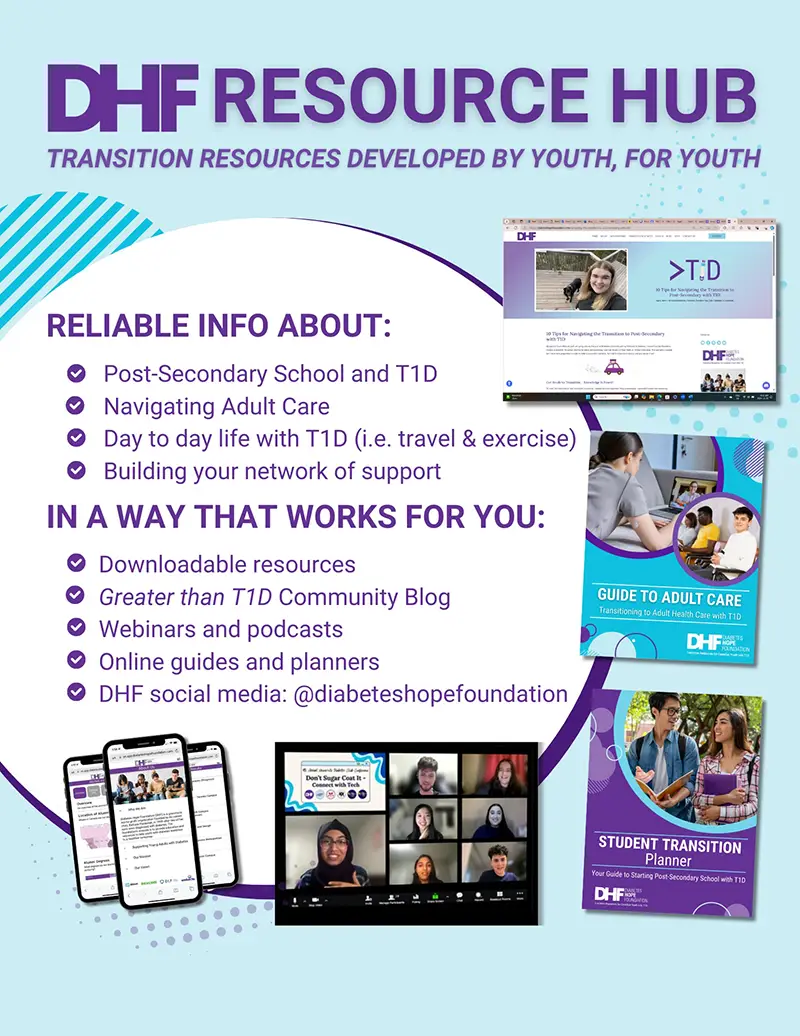
Diabetes Hope Foundation offers an extensive library of resources for students transitioning to post-secondary education such as the ones below. View all resources in their Transition Resource Hub.

These videos can help start conversations without relying on diabetes-organization content:

Type 1 Diabetes: The Basics For Teachers & School Staff
Type 1 Diabetes and Food: What School Staff Should Know

Carrying Advocacy Into Adulthood

The advocacy skills you learn now – asking questions, communicating your needs, knowing your rights – will follow you as you grow. You’ll use them at jobs, in relationships, in healthcare appointments, and while traveling or doing sports. You don’t need to have everything figured out. You just need to stay involved, curious, and willing to speak up.

The Bottom Line

You can become a strong advocate by asking questions, speaking up about your needs, using your clinic as a resource (while understanding that not all clinics offer the same services), building support beyond the clinic, and practicing communication at school. Every time you advocate for yourself – even in a small moment – you are becoming stronger, braver, and more prepared for life with T1D.You’ve got this!

About the Author

Heather Cadigan Bio

Hi everyone! My name’s Heather and I was diagnosed with type one diabetes in 2015. I’m a Program Facilitator for DHF and my work mainly focuses on the online supports we provide students across Canada. Currently, I’m a teacher candidate in Trent University’s Bachelor of Education program, and I also work for the university as part of their student staff. In my spare time, I teach music lessons to local youth and am passionate about participating in educational initiatives that support inclusive learning and students with disabilities.

Follow Us:

Diabetes Hope Foundation (DHF) is a Canadian not-for-profit organization founded in 1999. The foundation’s mission is to provide education and resources to help youth with diabetes transition to a healthier tomorrow. Learn more about our youth programs and resources below.

Stay Connected!

Join our mailing list to receive occasional newsletters with the latest news and updates about our programs, resources & upcoming events!

Blog Categories

Recent Posts

Get Ready to Transition!

Transition Resource Hub, Resource Hub, Diabetes Resources, Type 1 Diabetes Resources, T1D Resources

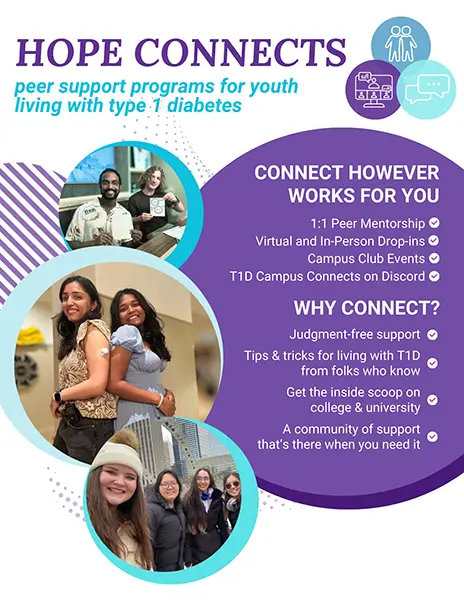
Join our DHF Community!

Hope Connect Program Flyer 2026
Donate