










Arlene & Raphael transition story, letting go
greater than t1D, blog, diabetes blog, type 1 diabetes blog

When T1D Meets Mindfulness

Feb 24, 2026 | T1D and Mental Health, Type 1 Diabetes

When T1D Meets Mindfulness

Here’s what I thought I knew about type 1 diabetes growing up: my blood sugar levels control my day, carbs are the enemy, it’s best to err on the side of having high blood sugar whilst exercising, when my glucose levels are out-of-range I’m a failure, and finally, the biggest and most unhelpful belief of mine: if my blood sugar goes low, I’ll die. Here’s what I know now: not even one of those beliefs has to be true.

As a Registered Psychotherapist (RP) in her mid-twenties, diagnosed with T1D at 6 years old, it had become quite difficult to ignore all those unhelpful beliefs I had about living with T1D. In therapy, we like to call those beliefs ‘stuck points’; unwanted, unhelpful, and persistent ideas that form the way we think, feel, and behave. The good news? Stuck points can become ‘unstuck’, and this is where I hand the microphone over to our dear friend: Mindfulness.

“Mindfulness here. From the bottom of my heart, I want to thank you, and I hope you thank yourself, for all the courageous work you do living with T1D. It’s one heck of an undertaking, and this deserves acknowledgement. I’d like to invite you to gently consider what some of your automatic reactions are when navigating T1D. Maybe an automatic reaction looks like eating a whole box of cookies when you’re low, or double-dosing insulin when you’re high. Notice how self-judgement quickly creeps in—right here and now—as you reflect on these reactions. I want you to know that it’s okay; self-judgement is just trying to step in and help, but now you are here to help yourself instead. Let’s pace ourselves and honour each emotion that arises as you let go of your stuck points, to transform your automatic reactions into thoughtful responses.”

1. Slow down to notice a ‘sticky’ thought, feeling, or behaviour, and get curious about it.

Since automatic responses happen well, automatically, Mindfulness interrupts this cycle by allowing us to shift from autopilot to intention. When we give space to slow down and notice what our stuck points are, we get to explore why they exist in the first place.

For example, say you’re in the business of overcorrecting with sugary treats when you’re blood glucose is low.

Consider: What motivates me to do this? Maybe you’re worried the low will interrupt your day, you look at the low as an excuse to indulge, you’re scared of passing out (and maybe even not waking up), and/or you simply don’t like the feeling of hypoglycemia.

Being curious and non-judgmental about our stuck points gives us space to validate why they exist, rather than getting angry at ourselves when we see our blood sugar skyrocket later.

Mindfulness says: “It makes sense why you’ve been overcorrecting.”

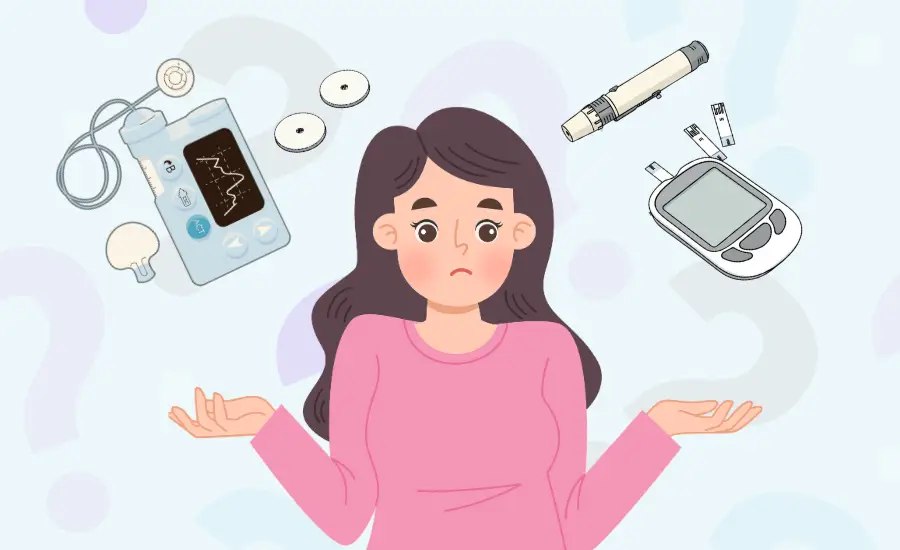
T1D meets Mindfulness, T1D and mindfulness

2. Stay on pause and consider alternate routes to safety.

It’s important to remind ourselves that our stuck points are trying to keep us safe, say, to protect us from fainting, being interrupted, or feeling sick. Here’s the caveat: stuck points tend to cause more harm than good, and it is up to us to release them from their roles.

For example, say you avoid eating before hitting the gym because it feels wrong giving yourself insulin before a workout. You recognize how skipping meals, especially before exercising is not optimal for performance or recovery, but you can’t seem to break out of this cycle.

Consider: What else can I do to feel safe right now? Maybe this looks like eating and dosing insulin but bring extra glucose tabs and low snacks in your bag, dosing only a portion of the suggested amount depending on the type of exercise you’re doing, having emergency contacts accessible on your phone or in-person, telling a staff member you’re diabetic so you don’t feel alone—the list goes on.

Reassuring ourselves that we are safe to let go of our stuck points is essential for building self-trust and making new, healthier choices.

Mindfulness says: “You are safe to choose a different path—you’ve got this.”

T1D meets Mindfulness, T1D and mindfulness

3. Choose your path from a place of self-love instead of fear.

Once we have noticed our stuck point and reassured ourselves that we are safe to think, feel, and act differently, now comes the time to choose love instead of fear. What I mean by this, is to respond instead of reacting — a response is slow, thoughtful, and caring, whereas a reaction is impulsive, automatic, and fearful.

For example, say you feel like a failure every time you see your blood-sugar levels are out-of-range. After navigating steps 1 and 2 as above, you’ve learned that your inner critic tells you you’re a failure in efforts to scare you into controlling your glucose levels. But you’ve also learned that you feel safest when reminding yourself that your glucose levels are not a reflection of your self-worth or identity. The former is fear, the latter, is love. Fear sends our stress levels and glucose levels on a roller coaster ride, whereas love grounds them.

Instead of scaring ourselves into ‘getting a grip’ on our T1D, I invite you to boldly love yourself into navigating T1D, walking alongside this condition with curiosity, and openness to change.

Mindfulness says: “Fear only worsens T1D symptoms,
love is what truly improves them.”
Remember those stuck points of mine from the start of this entry? Well, I’m grateful to report they’ve become unstuck, and I’m proud to share my new beliefs with you here:

I control my day
Carbohydrates are my friend
It’s best to be in range during exercise
My out-of-range glucose levels do not reflect my self-worth
If my blood sugar goes low, I will survive—and afterwards? I’ll thrive.

~ Kirsten Davidson, BA (Hons), MA, Registered Psychotherapist (RP)

Author’s Bio:

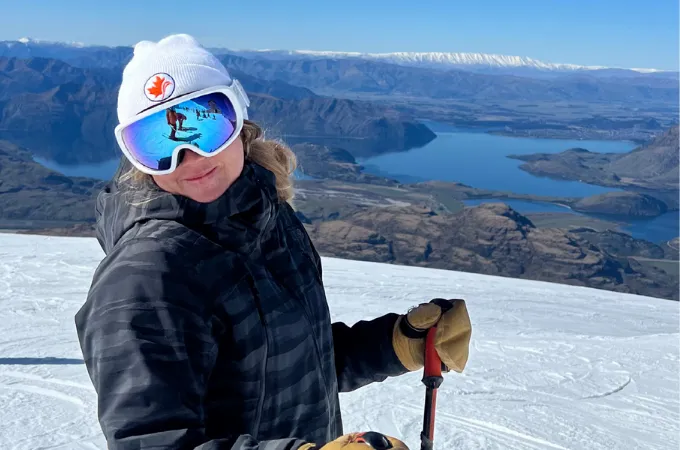
Kirsten Davidson bio

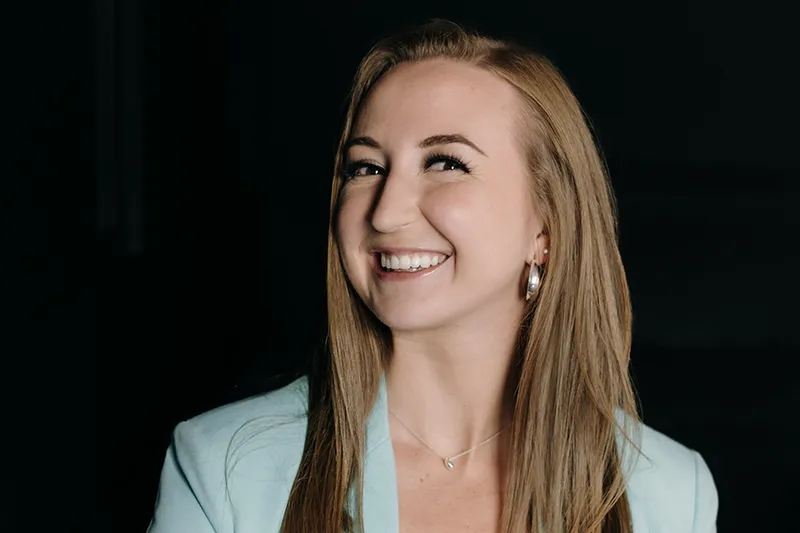
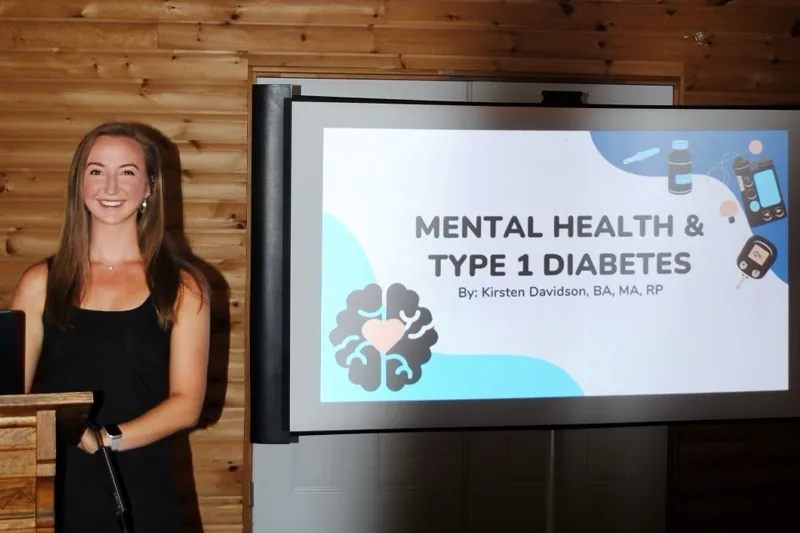
Kirsten Davidson is a Registered Psychotherapist and the Founder of Mind The Gaps Psychotherapy. Her approach empowers individuals to step out of their comfort zones and into their growth zones. Having lived with Type 1 Diabetes since the age of six, Kirsten brings both clinical expertise and lived experience to her work with individuals navigating T1D.

Follow Us:

Diabetes Hope Foundation (DHF) is a Canadian not-for-profit organization founded in 1999. The foundation’s mission is to provide education and resources to help youth with diabetes transition to a healthier tomorrow. Learn more about our youth programs and resources below.

Stay Connected!

Join our mailing list to receive occasional newsletters with the latest news and updates about our programs, resources & upcoming events!

Blog Categories

Recent Posts

Get Ready to Transition!

TRANSITION resources, T1D Blog

Join our DHF Community!

programs, peer support programs, diabetes programs, type 1 diabetes programs
Donate